What Is Intermediate Asana Practice.How Authentic Yoga in Rishikesh Helps Students Reach It
Every yoga practitioner reaches a point where the beginner postures no longer feel like a challenge, but the deeper layers of the practice haven’t yet opened up. This is the intermediate stage, the bridge between learning shapes and truly inhabiting them. It’s also where many students, and many teachers, get stuck without proper guidance.
At BinduSar Yoga, we’ve spent over 15 years training teachers in Rishikesh, the birthplace of modern yoga, and this is the exact gap our 300-hour program is built to close.
What Defines an Intermediate Asana Practice?
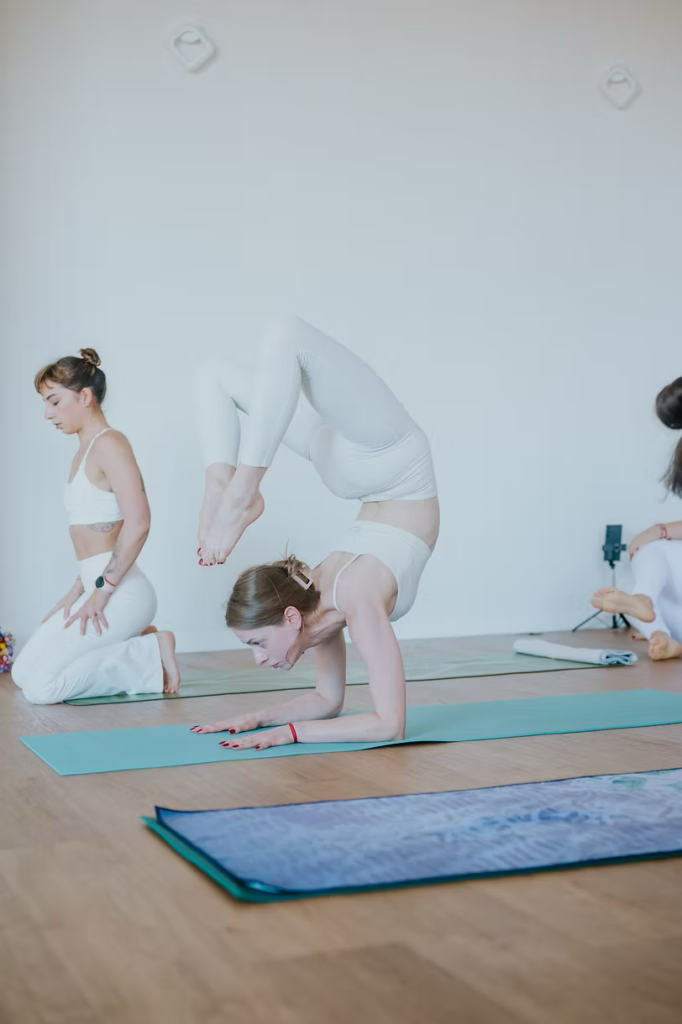
Intermediate practice isn’t simply about harder poses. It’s about a shift in how the body and breath work together. A student at this stage typically shows:
- Stability without strain: holding postures like Ardha Chandrasana or Bakasana with control, not force
- Breath-led movement: the vinyasa (the linking of breath to motion) becomes smooth rather than mechanical
- Awareness of alignment: understanding why a pose is shaped a certain way, not just copying a shape
- Emerging stillness: the ability to stay present in discomfort instead of rushing through it.
This is where vinyasa yoga in Rishikesh training becomes so valuable. Vinyasa, at its root, means “to place in a special way”, and intermediate students are learning to place their attention, not just their limbs.
Why Rishikesh Is the Right Place to Deepen Practice
Rishikesh isn’t just a scenic backdrop for yoga photos, it’s a living lineage. Studying here means learning asana within the same philosophical framework that shaped it: Patañjali’s Yoga Sutras, breath science (pranayama), and the understanding that asana is one limb of a much larger path.
This is the difference between a studio class and authentic yoga practice in Rishikesh: the postures are taught alongside their purpose. Intermediate students don’t just learn a harder arm balance, they learn how that arm balance builds the focus (dharana) that later supports meditation.
How a 300-Hour Training Bridges the Gap
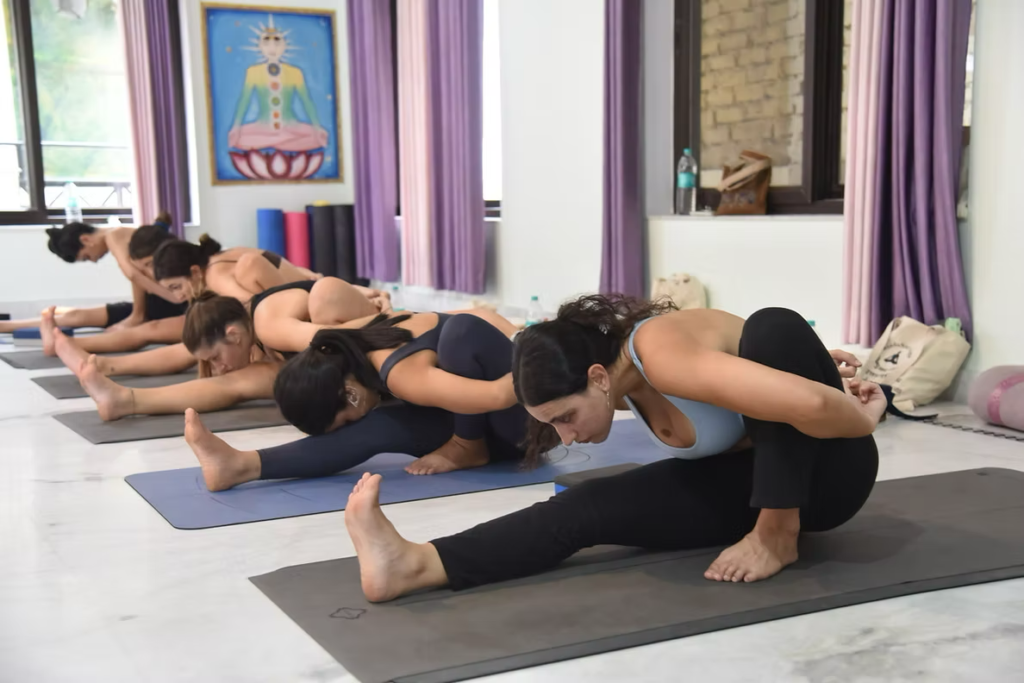
Many students complete a 200-hour TTC and feel ready for more — but aren’t sure where to go next. A yoga in Rishikesh 300-hour program exists exactly for this reason. It typically deepens:
- Advanced asana breakdowns- learning to teach and safely progress students into intermediate and advanced postures
- Adjustment and modification skills- knowing how to meet each body where it is
- Sequencing logic- building classes that build heat, then integrate stillness
- Subtle body study- nadis, chakras, and prana as they relate to physical practice
- Teaching methodology- moving from “doing yoga” to guiding others through it
At BinduSar Yoga, our 300-hour curriculum blends Ashtanga and Hatha Vinyasa traditions, so graduates leave with both the discipline of a structured practice and the adaptability to teach diverse students back home.
Bringing This Practice to Students: Body and Mind Together
The real skill of an intermediate-level teacher is integration, helping a student’s physical progress support their mental state, not compete with it. A few principles we teach:
Teach the “why.” Students retain and progress faster when they understand the purpose behind a posture– whether it opens the hips to relieve lower back tension, or builds core stability to support the spine in seated meditation.
Hold space for stillness. Intermediate practice is where many students first experience real discomfort- physically and emotionally. A teacher trained in authentic methods knows how to hold that space without rushing the student past it, which is often where the deepest growth in mental clarity happens.
The Bigger Picture:Asana as a Path, Not a Destination
In the Yoga Sutras, asana is described simply as a steady, comfortable posture — sthira sukham asanam. The intermediate stage is where students begin to feel this directly: strength without tension, focus without strain. This is the state that supports better sleep, lower stress, sharper concentration, and a more resilient nervous system — benefits that extend far beyond the mat.
This is what authentic training in Rishikesh offers that a weekend workshop cannot: time, lineage, and immersion in the very environment where these teachings were first systematized.
Ready to Deepen Your Practice?
Whether you’re a 200-hour graduate ready for more, or an experienced practitioner seeking to teach with real depth, BinduSar Yoga’s 300-hour Ashtanga/Hatha Vinyasa TTC in Rishikesh offers structured, authentic training rooted in tradition, not trend.